

Preserving the Legacy of Temple’s Northside
Established in 1979, the North Central Temple Historic District is one of Temple’s oldest and most beautiful neighborhoods. With homes ranging from quaint cottages to stately mansions, it has been home to governors, civic leaders, and the founders of Baylor Scott & White Health.
The district was created to safeguard the architectural integrity of the area, protect its single-family character, and honor the craftsmanship of those who came before us. Today, it continues to foster pride, preserve property values, and welcome visitors who come to experience Temple’s living history.
Take a stroll through the district
Explore Our Neighborhood History
Dive deeper into research on the District’s homes, compiled by our committee members and neighbors.


A sampling of our Historic homes
Renderings beautifully created by Lea Goates.
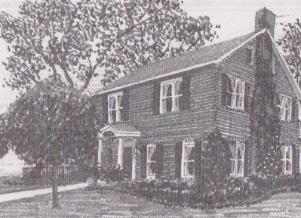
1309 N 9th St
1309 N 9th St
The Longmire Home
Dr. Arthur Carroll Scott, Jr., son of one of the founders of Scott and White Hospital built the tall, stately two-story house in 1932. Dr. Scott, considered the father of the modern Scott and White Hospital and Clinic (known now as Baylor Scott & White Health), invested much of himself in the construction of the impressive home. He eventually drew the final house design plans himself and inspected the construction site after work each day. Despite thoroughly investing himself in building the new home, another project soon caught his eye, and in 1936 Dr. Scott sold his “creation” to Dr. Victor and Ruth Longmire. Dr. Longmire was Chief of Staff and Head of Internal Medicine at Scott and White Hospital. He was well-regarded in the Temple area as a skillful physician and community benefactor. Mrs. Longmire was long admired for her unwavering commitment to various projects within the community. The Longmire family made the 1309 North 9th Street home a warm and comfortable retreat for family and friends for 47 years until Jimmy and Madelon Carroll bought and lovingly restored the home in 1983. The medical, legal, educational, and business professionals who have been residents in Longmire home dedicated themselves to the cultural and economic betterment of their neighborhood as well as to the City of Temple.
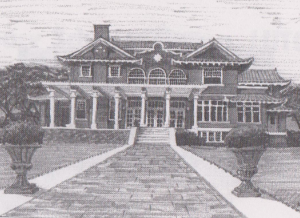
1302 N. 11th St
1302 N 11th St
The Woodson Home
Known as the cornerstone of the historic district, this magnificent home was built in the oriental craftsman style with a mixture of architectural elements. The prairie-style home blends English, Danish, French, German, Spanish, and Egyptian Revival designs to complete the residence as a reflection of the world travels experienced by the original owners. Dr. J.M. and Anna Burbank Woodson built the stunning 1302 North 11th Street home during the years of 1914-1916. Constructed around a central atrium, Rock Island, Illinois architect, Olaf Cervin designed the home according to Mrs. Woodson’s elegant and extravagant descriptions for her “dream home”. In addition to the 18,000 square feet original floor plan, the expansive property was located on a four acre site which would eventually include boundless gardens of exotic plants collected from around the world and an amphitheater where Sunday afternoon performances were hosted.
Dr. J.M. Woodson and Anna Burbank Woodson were married in 1892, and they moved to Temple that same year. He was as a Santa Fe Railroad surgeon and his wife was an heiress to a New Orleans sugar magnate. Both individuals were well educated and world traveled. Dr. and Mrs. Woodson served in leadership positions for numerous civic organizations throughout their lives, and they contributed greatly to Temple’s cultural and economic development. Dr. Woodson passed away in 1930, and Mrs. Woodson remained in the home until her death in 1962. The Woodson family sold the home in 1964. For half a century, the Woodsons set an example for others to follow in the areas of civic involvement and economic contribution to the historic district and the City of Temple. Residents who followed the Woodsons have chosen similar paths in regard to accepting the longstanding tradition of maintaining the heritage of the unique home and its surrounding neighborhood.
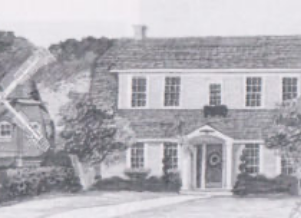
1116 N. 3rd St
1116 N 3rd St
The Bowmer Home
Soon after successfully representing Governor “Pa” Ferguson in a libel suit against the Houston Chronicle, Mr. DeWitt Bowmer built the “The Windmill House” in 1925 for his wife, Linnie Morgan Bowmer. The couple envisioned the design of the house as a reflection of their recent European trip during which they fell in love with Holland and the Dutch windmills. The authentic windmill on the property houses windmill gear that the Bowmers imported from Holland. In the past, the structure served the Bowmer family as both a children’s playhouse and laundry house. Mrs. Bowmer sold the family home after her husband’s death in 1940. In addition to the windmill, the Bowmer house was the site of “The Christmas Tree” on the north side of Temple. For many years, subsequent owners who were residents after the Bowmers decorated a giant blue spruce located in the front yard of the property with brightly colored bulbs from Thanksgiving to New Year’s Eve. Various business, legal, and medical professionals have called 1116 North Third Street home and have been active in community efforts to advance Temple’s civic, cultural, and economic development.
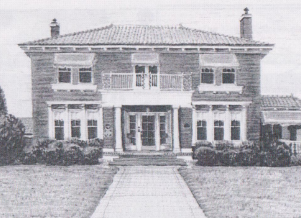
504 W. Nugent St
504 W Nugent St
The Fletcher Home
This stately home of Georgian architecture was built between 1925 and 1927 for James and Susan Fletcher. The home was designed and built by Ernest Scrivener of San Antonio and was recorded as a Texas Historic Landmark in 1981. Mr. Fletcher was a leading Temple businessman who owned Fletcher Enterprises, a prominent banking and industrial firm. He and Mrs. Fletcher lived in the home from the 1920’s to the 1940’s. The Fletcher’s son, Omar, lived less than a block from his parents in the equally impressive estate located at 1314 North 9th Street. Numerous business and medical professionals followed the Fletchers as residents of this landmark home, and all contributed considerably to the civic and economic development of Temple.
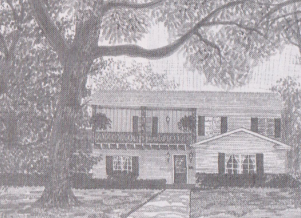
701 N. 9th st
710 N 9th St
The Daniel Home
In 1947, Dallas and Roy Lee Garrett built the attractive home at 710 North 9th Street and made it their residence until 1953. The Garretts sold the home in 1953 to Mr. and Mrs. F.H. (Dutch) Daniel. Mr. Daniel owned and operated the Buick dealership in Temple as well as Daniel Insurance. The Daniels spent more than forty years in the large traditional home before the widow, Mrs. Daniel, eventually sold the property in 1994-95. Many of the rooms in the home have retained the knotty pine paneling updated with paint and the original built-in desks and bookshelves that were popular in custom homes of this period. Residents who have lived in this captivating home after it was sold by the Daniels include various business and entrepreneurial professionals who have greatly contributed to the cultural and economic advancement of both the historic district and the City of Temple.
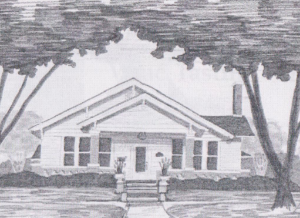
1302 N. 7th St
1302 N 7th St
The Todaro Home
In 1924, Mrs. Dony Stone, a widow from Falls County built this charming bungalow as a residence for herself and her younger children. Unfortunately, Mrs. Stone died in the month preceding the completion of the new home, and her estate sold the new residence to Joseph P. and Congetta Todaro. Mr. Todaro, a native of Sicily, was a successful businessman who owned several commercial properties. The Todaros enjoyed this attractive home as their residence for approximately 40 years until 1964 when S.L. and Hazel Brady bought the home. The Bradys made the charming home their residence for a lengthy stay of 30 years. Subsequent business and entrepreneurial professionals who followed the Bradys as residents in the Todaro home continued in the tradition of displaying pride in ownership regarding their very pleasant home and neighborhood.
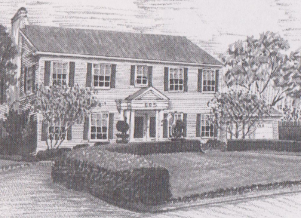
605 w. Nugent st
605 W Nugent St
The McCreary Home
In the early 1930s, Dr. Palmer and Marie Porter Woodson built a graceful Colonial Revival style home just around the corner from Dr. Woodson’s father’s home which is now known as the “Chinese Mansion”. Dr. Palmer Woodson was an Ear, Eyes, Nose, and Throat Specialist, and he practiced medicine with his father and brother at the Woodson Clinic. When the Palmer Woodsons relocated to Austin in 1946, they sold their home to friends, Irvin and Mary Vivian McCreary. Mr. McCreary was chairman of the Farmers State Bank, later known as Temple National Bank. Mary Vivian and Irvin were both dedicated public school advocates. As a result, Mr. McCreary served on the Texas State Board of Education and was one of the founders of the Texas Teachers Retirement System. Mrs. McCreary was very active in numerous civic organizations and contributed greatly to the establishment and maintenance of various service associations within the City of Temple. The McCreary family spent almost half a century enjoying the home and grounds of their West Nugent Street home, eventually selling the property in 1993. Residents of the McCreary Home have since continued in the tradition of maintaining the rich presence of this historic home of civic founders at both local and state levels.
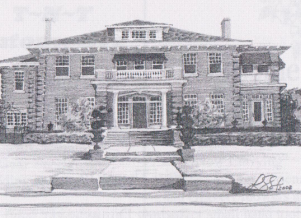
508 w. Munroe st
508 W Munroe St
The Doering Mansion
Judge Winbourn Pearce and wife, Margret built this grand, Prairie style home in 1913. Judge Pearce was a member of the Supreme Court Advisory Committee, and he chose to build his home facing south toward downtown Temple. In the 1920’s, the Pearces sold the home to Frank and Nora Doering. Frank Doering was a well-known entrepreneur who owned several Ford dealerships in the Temple area. Mr. Doering also built the Doering Hotel, later known as the Hawn Hotel. The Doerings sold the home in 1929, however, locals continue to refer to the striking property as the Doering Mansion. Various well-respected business, legal, and medical professionals called the Doering Mansion home over the years, and current residents continue to maintain and improve the visible features for all to enjoy.